
Who Would You Give the Seat to First? Social Dilemma and Priority Seating Analysis
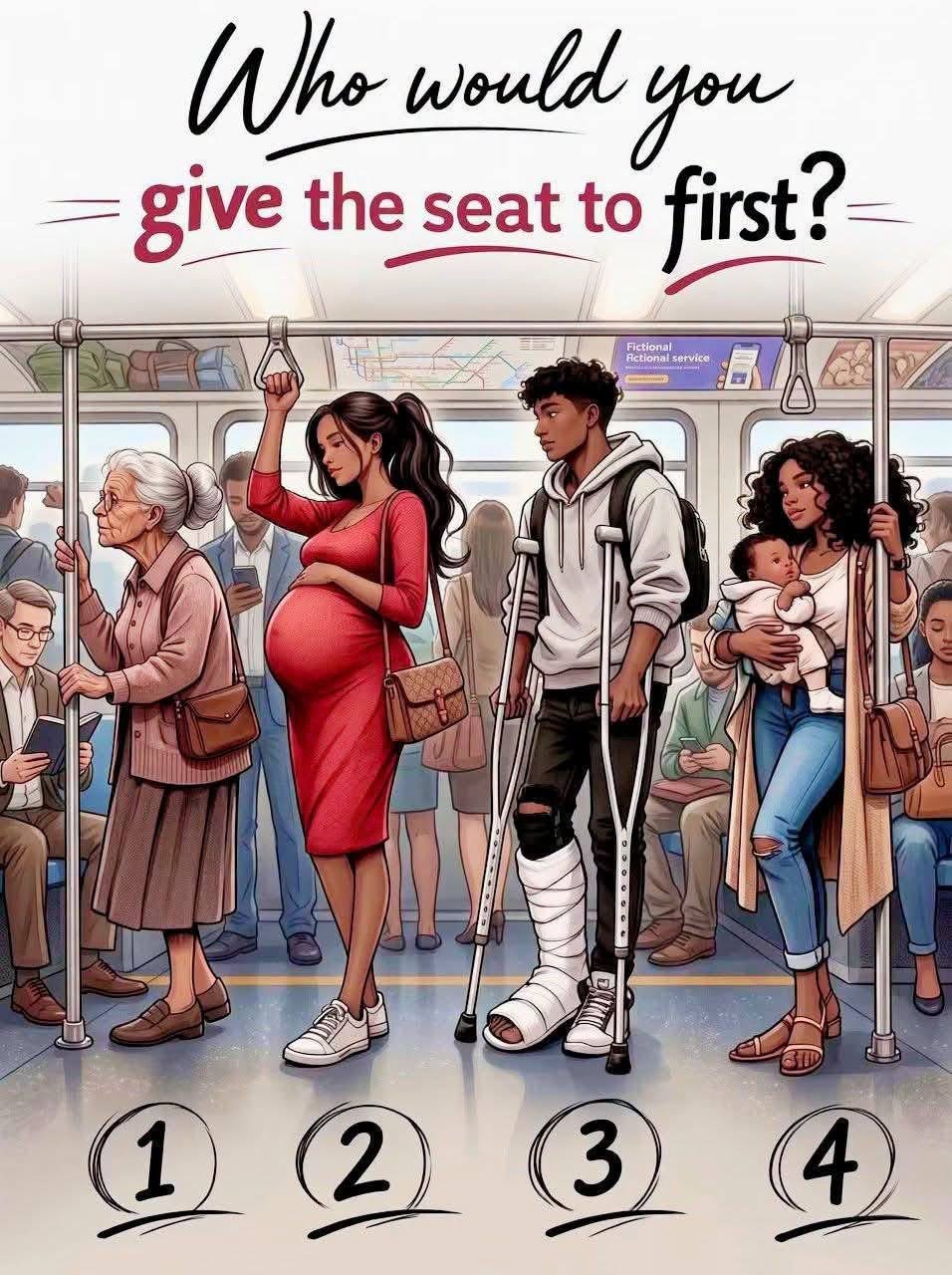
Moral scenarios and public etiquette questions frequently generate vibrant discussions across social media platforms. A widely shared graphic poses a simple yet thought-provoking question: “Who would you give the seat to first?”
The image depicts four standing passengers on a busy public transit train, numbered 1 through 4:
- Passenger 1: An elderly woman holding a handrail.
- Passenger 2: A pregnant woman holding an overhead strap.
- Passenger 3: A young man on crutches with a leg cast.
- Passenger 4: A mother holding an infant in her arms.
While there is no single “wrong” choice, examining each situation through the lenses of safety, physical strain, and priority seating guidelines offers valuable perspectives.
Here is a full breakdown of the four options and the reasoning behind each choice.
Evaluating the Four Options
Option 1: The Elderly Woman
Elderly individuals often experience reduced stability, joint fatigue, or osteoporosis, making sudden train stops or acceleration particularly hazardous. Offering a seat to an elderly passenger prevents falls and ensures their safety during travel.
Option 2: The Pregnant Woman
Carrying extra weight and experiencing changes in balance, pregnant women face physical exhaustion and increased risks associated with sudden lurches or sudden stops. Priority seating in most public transit systems specifically designates seats for pregnant riders.
Option 3: The Injured Man on Crutches
A person navigating public transportation on crutches with a cast faces severe physical strain and instability. Standing on one leg on a moving vehicle requires significant effort and poses a high risk of re-injury if the train sways sharply.
Option 4: The Mother with a Baby
Holding a young baby while standing on a moving vehicle requires constant balance and strength. Seating the mother protects both her and the child from potential falls or sudden bumps during transit.
How Transit Systems Prioritize Courtesy
Most public transportation networks designate priority seating near doors for passengers with specific mobility needs:
- Mobility Impairments: Passengers using crutches, canes, or mobility aids are often prioritized due to the immediate risk of falling while the vehicle is in motion.
- Special Physical Conditions: Pregnant riders, seniors, and parents carrying infants are equally encouraged to use priority seating for safety and comfort.
- Community Courtesy: In practice, multiple seated passengers often offer their seats simultaneously when seeing individuals in need, resolving the dilemma entirely!
Financial Security and Smart Decision-Making Insights
Navigating everyday public safety and looking out for others connects closely with protecting your family’s future and well-being.
- Evaluating Financial Coverage: Just as offering a seat protects a vulnerable passenger on a ride, securing comprehensive Life Insurance Plans guarantees long-term financial security and peace of mind for your loved ones.
- Proactive Health Protection: Maintaining robust Health Insurance Plans ensures that medical care, injury rehabilitation, and family healthcare needs are fully covered without unexpected financial stress.
Conclusion
Whether you choose the elderly woman, the pregnant mother, the injured young man, or the mother with her baby, each choice demonstrates empathy and care for fellow commuters!
Frequently Asked Questions
Is there a official legal rule for who gets priority seating first?
Most public transit agencies do not rank priority passengers against one another; priority seats are generally available on a first-come basis for elderly passengers, pregnant women, and individuals with disabilities or injuries.
What should you do if multiple passengers need a seat?
If you see several people who could benefit from a seat, you can offer yours to the person nearest to you or encourage other able-bodied passengers nearby to offer their seats as well.