Toasting Levels, Cheese Selection, and Skillet Technique
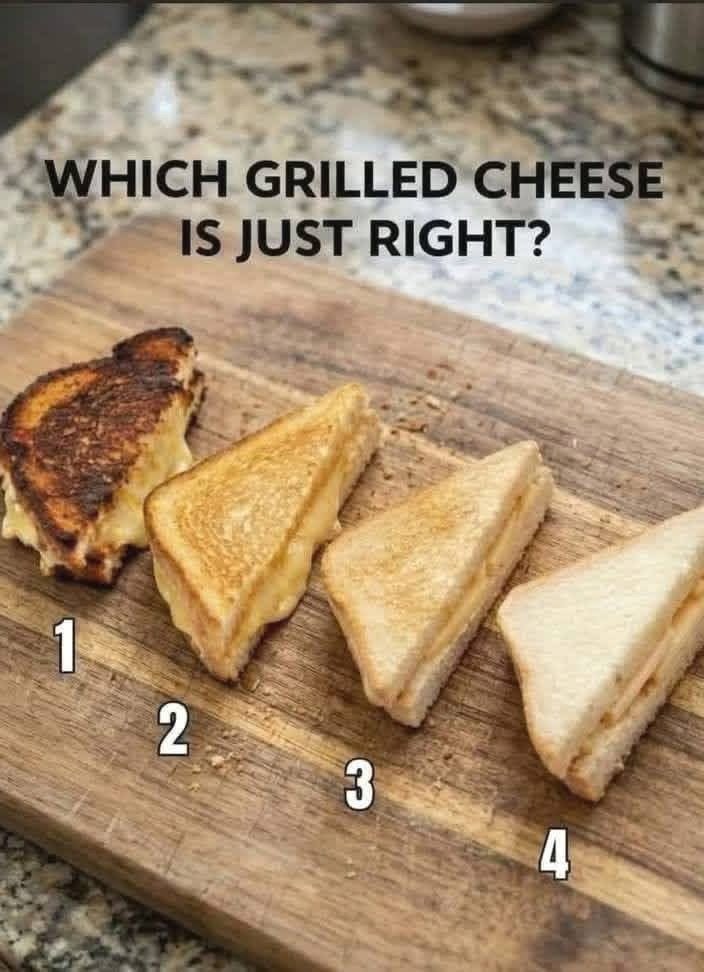
Few comfort foods evoke as much passion and debate as the classic grilled cheese sandwich. A viral culinary image displaying four triangular cut grilled cheese sandwiches arranged on a wooden cutting board—ranging from 1 (deeply charred with melted cheese oozing out), 2 (perfectly golden-brown with ideal melt), 3 (lightly toasted with warm cheese), to 4 (barely warmed, pale white bread with unmelted cheese)—asks food lovers “WHICH GRILLED CHEESE IS JUST RIGHT?” Achieving grilled cheese perfection requires balancing heat control, fat selection, and proper bread-to-cheese ratios.
Understanding heat distribution, choosing high-melting cheeses, and mastering pan technique ensures a crispy, golden-brown crust with a gooey center every time.
Breakdown of Toasting Levels and Cooking Techniques
Every level on the toast spectrum reflects differences in pan temperature, fat application, and cooking duration.
1. High Heat vs. Low Heat Pan Control
Cooking over high heat causes the bread exterior to char or burn quickly before the interior cheese has time to fully melt, resulting in dark, crispy edges like Sandwich 1. Low-to-medium heat allows the bread to develop a uniform golden crunch (Sandwich 2) while ensuring the cheese reaches a smooth, gooey consistency. Under-cooking or using insufficient heat results in soft, pale bread and cold cheese centers (Sandwiches 3 and 4).
2. Choosing the Right Cooking Fat: Butter vs. Mayo
Spreading room-temperature unsalted butter on the outer bread slice provides rich, classic flavor and golden browning. Alternatively, spreading a thin layer of mayonnaise on the bread exterior creates an exceptionally crisp crust due to its high smoke point and egg-and-oil emulsion.
Cheese Selection, Bread Choices, and Kitchen Safety
Building an exceptional sandwich relies on combining complementary ingredients and practicing basic skillet safety.
Selecting the Best Melting Cheeses
Sharp cheddar, American cheese, Gruyère, Fontina, and Monterey Jack offer superior meltability and rich flavor profiles. Combining a sharp, aged cheese for flavor with a mild, high-moisture cheese for texture creates the ultimate melted stretch.
Sturdy Bread and Skillet Care
Using sturdy, medium-thick sliced sourdough, white bread, or brioche prevents the sandwich from becoming soggy during cooking. Utilizing a heavy cast-iron skillet or non-stick pan distributes heat evenly across the entire sandwich surface.
Practical Tips for Making Perfect Grilled Cheese
- Cook Low and Slow: Maintain medium-low heat to ensure the cheese melts thoroughly without burning the bread.
- Cover the Pan Briefly: Place a lid or foil tent over the skillet for 1–2 minutes to trap steam and accelerate cheese melting.
- Shred Your Own Cheese: Freshly shredded cheese melts much faster and smoother than pre-shredded bagged cheese containing anti-caking agents.
Frequently Asked Questions (FAQ)
Is butter or mayonnaise better for grilled cheese?
Both work great—butter offers rich classic flavor, while mayonnaise produces an extra-crispy, golden crust with less risk of burning.
What is the best bread for a grilled cheese sandwich?
Sourdough, thick-cut white bread, and brioche are top choices because they hold up well to butter and melted cheese.
Why does pre-shredded cheese not melt as smoothly?
Pre-shredded cheese contains added cellulose and cornstarch coatings to prevent clumping, which inhibits smooth, gooey melting.