The Answer to the Classic “Many Teeth” Riddle
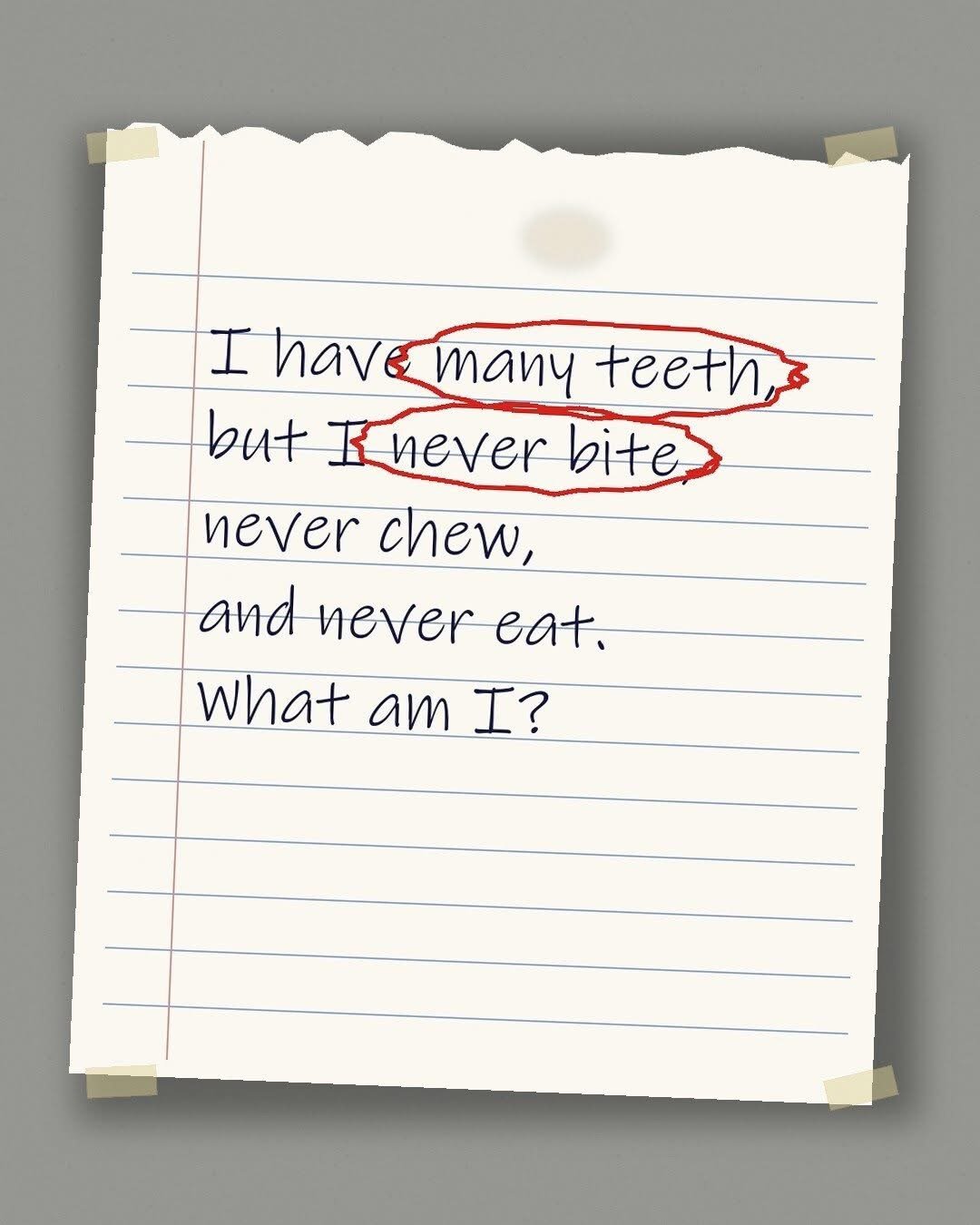
Riddles, word puzzles, and brain teasers have entertained human minds across cultures for centuries, offering fun ways to test lateral thinking and cognitive flexibility. A viral handwriting image featuring a lined paper note—captioned “I have many teeth, but I never bite, never chew, and never eat. What am I?”—sparks engaging discussions among puzzle lovers on social media. Wordplay riddles rely on double meanings, taking words with distinct physical descriptions—like “teeth”—and applying them to non-biological everyday household objects.
Understanding the solution to this popular riddle, exploring how brain teasers support cognitive health, and learning practical ways to keep the mind sharp provides engaging insights for all ages.
Solving the Riddle: What Has Teeth But Never Bites?
The classic answer to this viral riddle is A COMB (or alternatively, a saw, a rake, or a zipper).
1. The Anatomy of Everyday Objects
In English vocabulary, the individual narrow projections on a hair comb, saw blade, rake, or zipper are formally called “teeth.” While biological teeth function to bite, chew, and process food, mechanical “teeth” perform everyday tasks like detangling hair, cutting timber, gathering leaves, or fastening clothing.
2. How Lateral Thinking Puzzles Work
Riddles like this one trick the human brain through personification, encouraging the reader to imagine a living creature or monster with sharp teeth. Overcoming this visual mental block requires shifting focus from biological features to everyday functional objects surrounding us in daily life.
Cognitive Health, Mental Agility, and Neurological Wellness
Engaging in regular mental workouts like riddles, crosswords, and logic puzzles plays an active role in lifelong cognitive resilience.
Brain Training and Mental Sharpness
Solving brain teasers stimulates neural pathways, improving problem-solving abilities, working memory, and focus. Regular cognitive exercise helps build brain reserve, supporting mental clarity as adults navigate routine daily challenges.
When to Consult a Healthcare Professional
While occasional forgetfulness or struggling with a tricky riddle is completely normal, persistent memory loss, severe disorientation, or sudden cognitive decline warrants medical evaluation by a neurologist or primary care doctor. Standard health insurance policies, Medicare, and private health plans cover comprehensive neurological screenings and cognitive assessments.
Practical Tips for Keeping Your Mind Sharp Daily
- Solve Daily Puzzles: Spend 10 to 15 minutes each day working on word searches, sudoku, crosswords, or lateral thinking riddles.
- Learn a New Skill: Challenge your brain by picking up a new language, musical instrument, or creative hobby to build fresh neural connections.
- Stay Physically Active: Regular aerobic exercise boosts blood flow to the brain, supporting memory retention and overall cognitive longevity.
Frequently Asked Questions (FAQ)
What is the answer to “I have many teeth, but I never bite”?
The primary answer is a comb. Other valid answers featuring mechanical teeth include a saw, a rake, or a zipper.
Why are riddles good for brain health?
Riddles encourage lateral thinking, improve vocabulary, strengthen problem-solving skills, and stimulate neural connections in the brain.