Only geniuses can solve it.
The riddle that makes the best of us lose
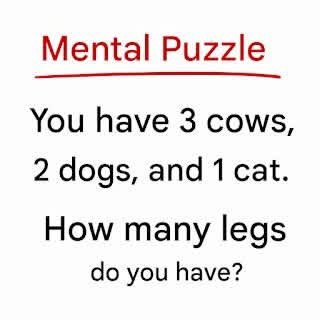
Here is the riddle in all its simplicity: * “You have 3 cows, 2 dogs, and 1 cat. How many legs do you have?”*
As soon as the question is read, the reflex is immediate: you start counting the animals’ legs. Three cows make 12 legs. Two dogs, 8 more. The cat adds 4. Total in your head: 24. Answer given confidently. And… wrong!
What the brain did was exactly what the riddle hoped for: to go off in the wrong direction without noticing the real question.
Why does our brain get tricked every time?
This phenomenon has a name: selective attention. Our brain processes information automatically. It spots the words “cows”, “dogs”, “cat” and gets carried away: * “Ah, animals, we have to count the legs!” * It then misses the essential information.
Read the question a second time, slowly: * “How many legs do you have?”*
Not animals. You. The question is about you, the person reading it. And unless there’s a very specific situation, you have two legs. That’s all. So the correct answer is simply 2 .
A classic example of a linguistic trap, isn’t it? The content of the sentence—animals—attracts all the attention, while the real subject of the question goes completely unnoticed. Clever.
What this little game reveals about your way of thinking
Beyond the initial smirk upon discovering the solution, this type of challenge is genuinely beneficial. Solving puzzles daily, even short ones, trains concentration, sharpens logical reasoning, and boosts memory. Some studies even suggest that regularly stimulating your brain with small challenges helps maintain cognitive abilities for longer. A good reason to give it a try!
And honestly, sharing this kind of riddle with friends or family is a guaranteed source of laughter. Who hasn’t seen someone answer “24!” with complete conviction before correcting themselves and laughing?
How to integrate these small challenges into your daily life
You don’t need to join a Mensa club to exercise your brain. Here are a few simple ideas: a riddle with your morning coffee, a logic puzzle during your lunch break, or a family challenge on the weekend. The important thing is consistency, not difficulty.
And the next time a question seems obvious to you… take two more seconds before answering.
The simplest answer is often the right one — but you still have to take the time to really read the question.