Who Owns Jimmy John’s? The Journey from a $25,000 Loan to a Global Sandwich Empire
The story of Jimmy John’s is a classic American success story—built on a foundation of “scarcity,” hard work, and an obsession with detail.
From a small garage in a college town to a multi-billion dollar brand, the ownership and leadership of the company have evolved significantly over the last four decades.
The Founder’s Story: Jimmy John Liautaud
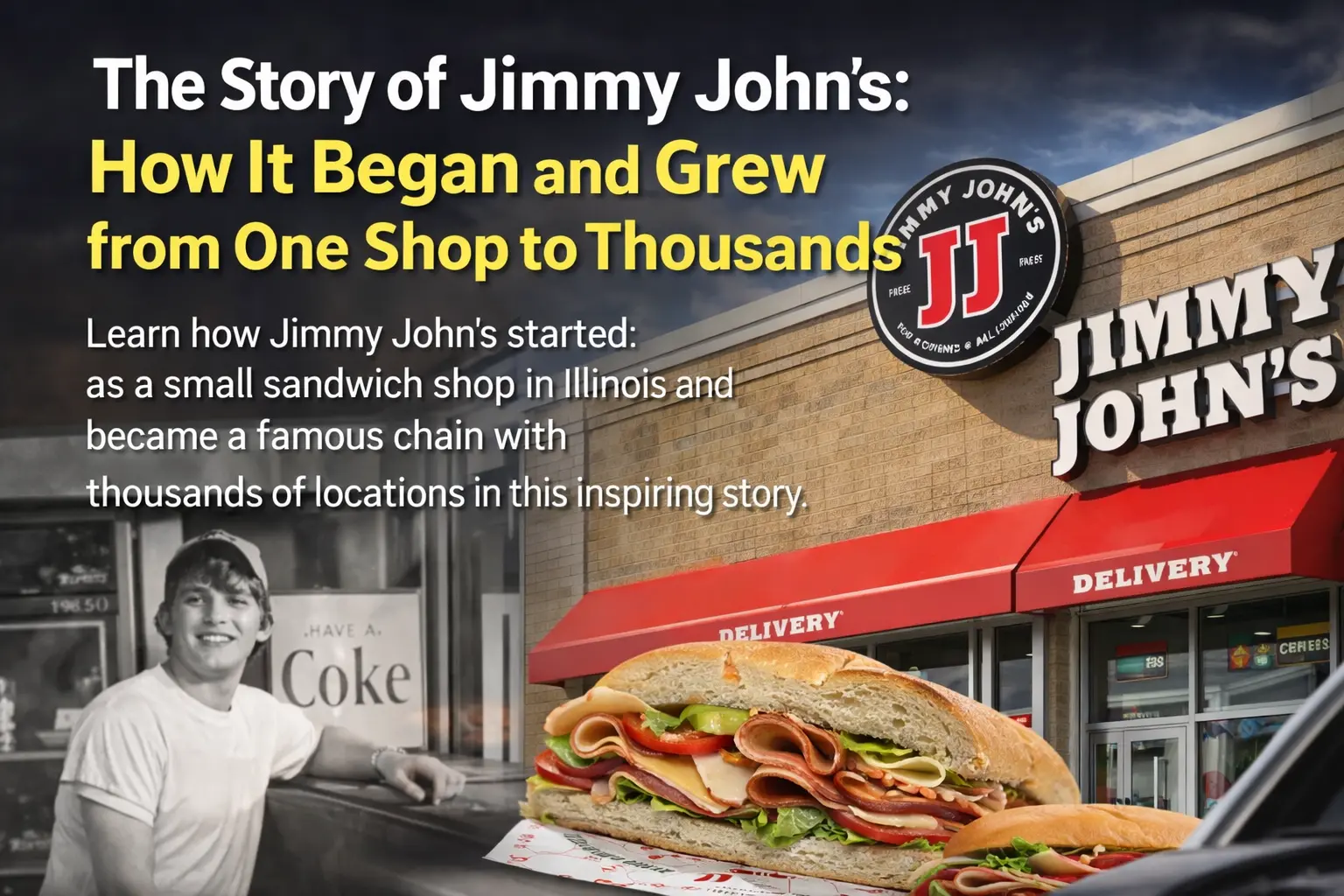
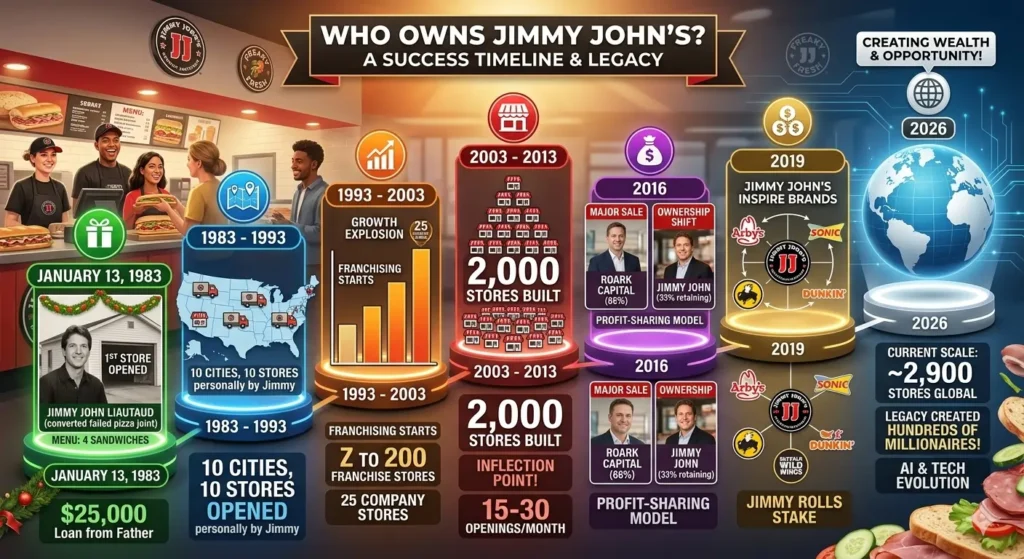
In January 1983, 19-year-old Jimmy John Liautaud opened the first Jimmy John’s in Charleston, Illinois. Facing a choice between the Army or starting a business, Jimmy took a $25,000 loan from his father.
Originally wanting to open a hot dog stand, he realized he couldn’t afford the necessary equipment like fryers and steam tables. By default, he pivoted to sandwiches because they were “efficient” and affordable to start.
He designed the menu himself—originally just four sandwiches and 25-cent Cokes—and baked the bread by hand in a converted two-door garage.
The Early Scaling (1983–2003)
Jimmy John’s didn’t become a giant overnight. The growth happened in distinct waves:
- 1983–1993: Jimmy moved to 10 different cities in 10 years, opening 10 stores personally to ensure every detail was perfect.
- 1993–2003: The business expanded to 200 franchise stores and 25 company-owned locations.
Creating the First Sandwich Menu
Before opening the restaurant, Jimmy experimented with recipes at home. He baked bread in his mother’s kitchen and tested different sandwich combinations.
After testing several recipes with family members, he finalized four original sandwiches:
- The Pepe
- The Big John
- The Vito
- The S&M
These sandwiches became the foundation of the early Jimmy John’s menu and helped define the brand’s focus on simple but high-quality ingredients.
The Early Growth of Jimmy John’s
In the beginning, the founder worked extremely long hours, often starting early in the morning and working late into the night.
One of the biggest priorities was creating a consistent customer experience. To achieve this, systems were developed for:
- Preparing sandwiches
- Managing staff
- Delivering orders quickly
- Maintaining food quality
This focus on efficient operations and consistency became a key part of the brand’s identity.
The “Freaky Fast” Delivery Concept
A major factor that helped Jimmy John’s stand out was its emphasis on speed.
The brand introduced the concept of “Freaky Fast” delivery, promising customers quick service and fresh sandwiches delivered rapidly.
This marketing message quickly became one of the most recognizable slogans in the sandwich industry.
Expanding Across the United States
As the brand gained popularity, new locations began opening across the country.
Some major milestones include:
- 2001: The 100th store opened in Michigan
- 2007: The 500th store opened in Seattle
- 2011: Jimmy John’s became a billion-dollar brand
- 2016: The chain surpassed 2,500 locations
This growth turned Jimmy John’s into one of the fastest-growing sandwich chains in the U.S.
Menu Innovations Over the Years
As the company expanded, the menu also grew. Several new items were introduced to give customers more choices.
Popular additions included:
- BLT sandwiches
- Club Lulu (turkey and bacon club)
- Hot cherry peppers
- Cucumbers
- The Unwich (lettuce-wrapped sandwich)
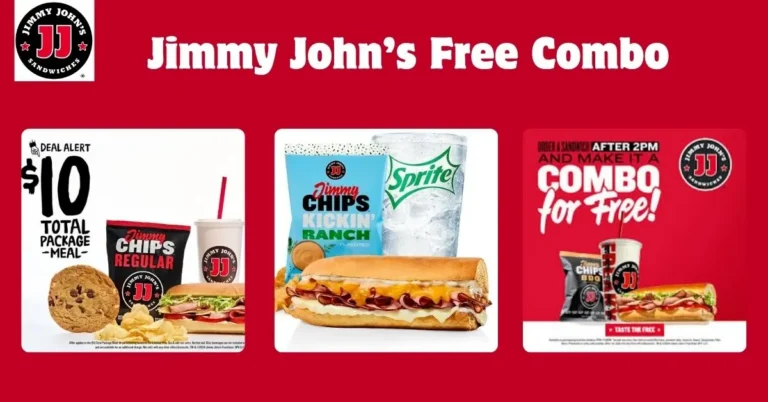
- Jimmy John’s branded chips
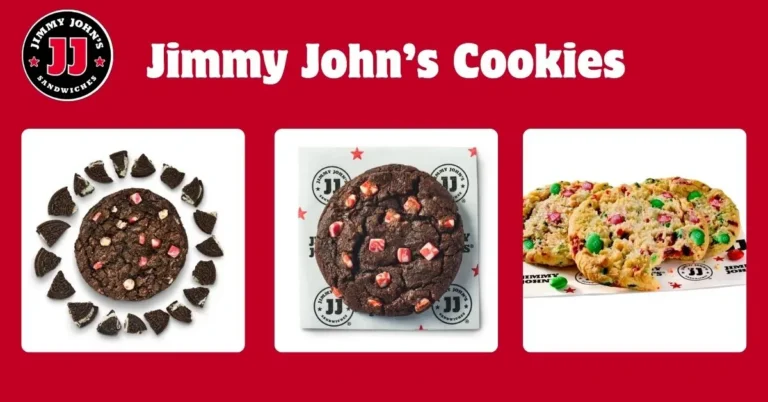
- Triple Chocolate Chunk Cookie
These items helped the brand attract a wider range of customers.
Digital Ordering and Online Growth
With the rise of technology, Jimmy John’s also expanded into digital platforms.
The company introduced:
- Online ordering
- Gift cards
- Mobile app ordering
- Social media engagement on platforms like Facebook and Instagram
These tools made ordering more convenient for customers and helped the brand reach a larger audience.
Focus on Quality Ingredients
One of the key principles behind Jimmy John’s success is its focus on ingredient quality.
The company emphasizes:
- Freshly baked bread
- High-quality meats
- Fresh vegetables
- Consistent sandwich preparation
This commitment to quality helped build customer loyalty and strengthen the brand’s reputation.
Training and Franchise Growth
As the company expanded, training programs were introduced to maintain consistency across all locations.
New training centers helped managers and franchise owners learn:
- Store operations
- Customer service
- Food preparation standards
- Speed and efficiency systems
These programs ensured that customers would receive the same experience at every location.
Jimmy John’s Today
Today, Jimmy John’s is one of the most recognizable sandwich brands in the United States.
The company continues to focus on:
- Fast service
- Simple menus
- Fresh ingredients
- Efficient operations
What started as a small sandwich shop in Charleston has grown into a nationwide restaurant chain with thousands of locations.
Current Ownership: Inspire Brands
While Jimmy John Liautaud is the face and soul of the brand, he is no longer the majority owner. The transition of ownership happened in two major stages:
- 2016: Jimmy sold two-thirds (66%) of the business to Roark Capital Group.
- 2019: Jimmy rolled his remaining 33% stake into Inspire Brands.
Today, Jimmy John’s is a key pillar of the Inspire Brands portfolio, which also includes:
- Dunkin’ Donuts
- Arby’s
- Sonic Drive-In
- Buffalo Wild Wings
- Baskin-Robbins
As of 2026, the chain has grown to approximately 2,900 locations.
The Secret Sauce: Incentives and Millionaires
One of the most impressive parts of the Jimmy John’s legacy is the wealth it created for its employees. Jimmy’s model was built on a “symbiotic” relationship with his managers:
- The Profit-Sharing Model: Managers were paid a base salary (typically $36k–$42k) but received 25% of the store’s profits.
- Results: This allowed store managers to earn between $80,000 and $120,000 per year.
- Creating Millionaires: Jimmy proudly states that he has made hundreds of managers and owners millionaires. In fact, 14 out of 17 department heads at Jimmy John’s headquarters originally started as sandwich makers in the shops.
Challenges: Policy and Litigation
Jimmy John Liautaud has been vocal about how government policy disrupted his business model. Between 2012 and 2015, he faced significant legal challenges:
- Labor Laws: New definitions for managers and “co-employment” rules led to massive litigation.
- The Minimum Wage Debate: Jimmy is a staunch opponent of government-mandated minimum wages, arguing that the free market should determine wages. He believes mandated raises take the “bottom rung off the ladder,” making it harder for people to start their journey out of poverty.
- Adjudicative Judges: Jimmy felt targeted by the Department of Labor and the IRS, leading him to eventually sell the business after decades of “fighting.”
Future Outlook: AI and Technology
Looking forward, the sandwich industry is on the verge of a technological evolution. Jimmy believes that AI and robotics will inevitably play a role in the restaurant model to manage labor costs.
As technology evolves, the goal remains the same: keeping the business “right and tight.” Jimmy’s advice to entrepreneurs today? Focus on the details—like keeping the front door glass crystal clear—and respect the freedom that allows businesses to thrive.
Quick Facts: Jimmy John’s Ownership History
| Year | Milestone | Owner/Status |
| 1983 | First store opens | Jimmy John Liautaud (100%) |
| 2016 | Major Sale | Roark Capital (66%), Jimmy John (33%) |
| 2019 | Full Integration | Inspire Brands |
| 2026 | Current Scale | ~2,900 stores |
Frequently Asked Questions
When was Jimmy John’s founded?
Jimmy John’s was founded in 1983 by Jimmy John Liautaud.
Where was the first Jimmy John’s restaurant located?
The first location opened in Charleston.
What made Jimmy John’s famous?
The brand became famous for fresh sandwiches and “Freaky Fast” delivery service.
How many Jimmy John’s locations are there?
The chain has thousands of locations across the United States, primarily through franchising.