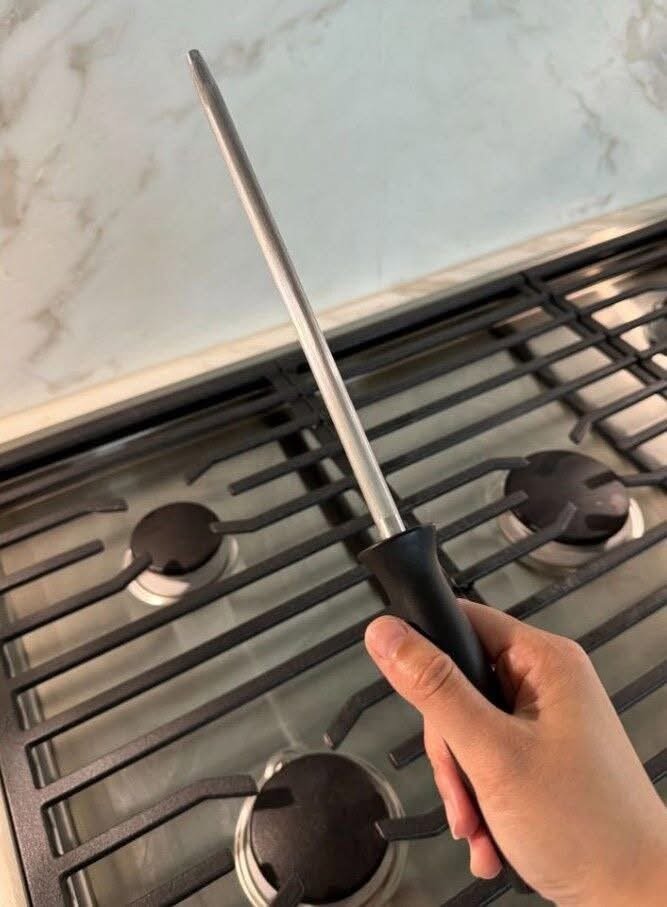
My mother-in-law thinks this tool sharpens her knife, but I didn’t think so. We can’t seem to agree. Is she right?
It’s a small everyday situation in many kitchens — someone proudly pulls out a honing rod and runs it along a knife blade, confident they’re sharpening it. Meanwhile, someone else watches and wonders, “Is that really sharpening the blade, or just making you feel like it is?” If you and your mother-in-law are having this exact debate, you’re not alone. Lots of home cooks mix up the difference between honing and sharpening, even though both have important roles in keeping knives performing well.
Let’s break down what a honing rod actually does, what sharpens a knife, and how to explain all this in a calm, practical way — because whether you love cooking together or simply want smoother slicing, understanding the difference matters.
What a Honing Rod Actually Does
A honing rod (sometimes called a steel) is a long, rod-shaped tool you run along the edge of a knife. It’s often made of steel, ceramic, or diamond-coated surfaces.
Here’s the key point:
A honing rod does not remove metal or fix a dull blade.
Instead, it realigns the edge of the blade that has bent slightly out of shape during normal use.
Think of it like brushing your hair — if the strands get a little messy, brushing makes them lie flat again, but it doesn’t grow new hair. Honing keeps the edge straight and aligned so the knife feels sharper and cuts more smoothly between real sharpening sessions.
This is why chefs often hone their knives before or after everyday chopping — it helps maintain performance.
What Sharpening Actually Is
Now for the part that often gets confused:
Sharpening actually reshapes the edge of the knife by removing a tiny amount of metal.
When a blade gets dull through use, tiny parts of the edge fold over, flatten, or wear away. Sharpening uses an abrasive surface (like a whetstone, sharpening system, or electric sharpener) to grind away metal until there’s a fresh, keen edge again.
You are literally creating a new edge angle when you sharpen.
So while honing restores alignment, sharpening restores sharpness itself.
So What’s Going On With the Honing Rod?
If your mother-in-law is using a honing rod and feels like her knife is sharp afterward, she is noticing a difference — but not because she’s sharpening the knife in the technical sense.
Here’s what’s likely happening:
The knife edge was slightly misaligned
Using the rod made it straight again
Straightening the edge makes it feel sharper
The blade still needs sharpening regularly
So she’s not wrong that the rod improves how the knife performs, but she is mistaken if she thinks it’s sharpening the blade the way a whetstone or sharpener would.
Why People Confuse Honing With Sharpening
There are a few reasons this common misunderstanding happens:
1. Visual Similarity
Both processes involve holding a tool against the knife at a similar angle — people assume both are doing the same thing.
2. Immediate Feeling
Honing often feels like sharpening because, for a misaligned edge, it instantly makes slicing easier.
3. Terminology
People sometimes use “sharpen” casually to mean “make sharper,” even if technically it’s not the right process.
This mix of feel, language, and habit is why even experienced home cooks can get confused.
How to Tell When a Knife Actually Needs Sharpening
Whether you’re using a honing rod regularly or not, there are a few simple ways to check if your knife really needs to be sharpened: